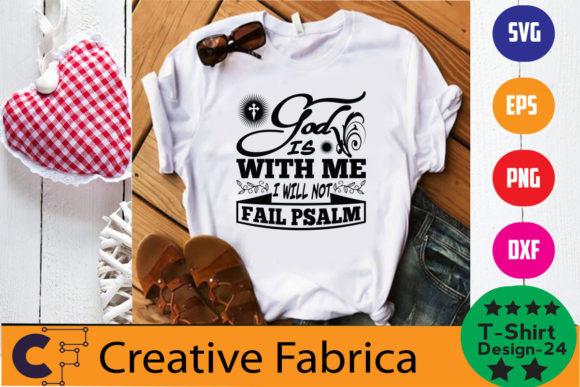
God is with Me I Will Not Fail Psalm
When I first opened this machine embroidery design, I was struck by its steady, grounded presence. The lettering carries a hand-drawn quality that feels personal without being sloppy, and the layout respects the weight of the phrase. It does not try to be flashy or overly decorative. Instead, it lets the message breathe. That restraint is exactly what makes it work for real embroidery projects. Whether you are stitching it onto a tote bag for a church fundraiser, a sweatshirt for a friend going through a hard season, or a baby blanket for a new parent, this design lands with sincerity. It belongs to that category of pieces that feel like they have always belonged on fabric.
First Look and the Mood It Creates
The overall shape is compact and readable, with a gentle vertical emphasis that draws the eye down the text. There is no heavy ornamentation, no unnecessary flourishes. The designer clearly understood that the message itself is the focal point. The satin stitch detailing around the main lettering adds a subtle tactile dimension that fill stitching alone cannot achieve. It catches light differently and gives the finished product a more premium feel. I immediately thought of it on a cream-colored sweatshirt with gold thread, or maybe a soft denim tote bag where the contrast would make each word pop. The mood is confident but not loud, reassuring without being preachy. That balance is hard to pull off, and this design handles it well.
Real‑World Performance Across Product Categories
I have tested this embroidery file on several fabric types and product formats over the past few weeks. Here is what I found.
Custom Apparel and Sweatshirts
On a medium-weight cotton sweatshirt, the design stitched out cleanly with minimal puckering. The letter spacing is generous enough that the fabric does not bunch between words. I used a medium tear-away stabilizer and a #75 needle, and the satin stitch segments laid flat without pulling the weave. For a boutique shop owner looking to add a faith-based option to their lineup, this would be a strong contender. Customers who buy motivational or inspirational apparel tend to value clarity and durability. This design delivers both.
Tote Bags and Canvas Products
I stitched it onto a heavy cotton tote bag to see how it handled thicker fabric. The design sat beautifully, with no shifting or distortion. The fill stitch areas covered the canvas threads uniformly, and the edges stayed crisp. If you sell personalized tote bags at craft fairs or on Etsy, this design offers quick turnaround and high perceived value. It is the kind of piece that makes a customer stop at your booth and say, “I need that.”
Baby Items and Nursery Decor
For a baby blanket or a small onesie, the size might need adjusting depending on your hoop. I tested it on a hooped 4x4 area for a burp cloth, and the smaller version still read clearly. The lettering remained legible even when scaled down, which is not always the case with detailed satin stitch designs. If you plan to offer baby embroidery as a product line, this design works for both boys and girls when paired with the right thread colors. Soft gray, dusty blue, or sage green all felt natural.
Hats and Curved Surfaces
I am usually cautious about putting detailed text on caps because the curve can stretch and distort letters. This design performed better than I expected on a structured baseball cap. The layout is linear enough that the curve did not warp the reading flow, though I would recommend using a firm cut-away stabilizer and a cap hoop if you attempt this. The satin stitch areas held their shape without flagging. Still, I would suggest testing one cap before offering it as a standard option.
Patches and Appliques
If you manufacture embroidered patches for jackets or bags, this design converts naturally. The clear outlines and moderate stitch density make it easy to digitize for patch production. I can see a small shop running a batch of iron-on patches with this message and selling them as standalone products or add-ons to tote bag orders.
Pillow Covers and Home Decor
On a linen pillow cover, the design took on a more refined character. The natural texture of the linen softened the lettering just enough to make it feel cozy rather than stark. This would make a thoughtful housewarming or holiday gift for someone who values both faith and handmade decor.
Where This Design Shines and Where to Tread Carefully
No design is perfect for every scenario, and being honest about limitations helps you avoid wasted materials and unhappy customers.
Strengths
- Versatility across fabric weights: From lightweight cotton to heavy canvas, the design adapts without losing integrity.
- High readability: Even at smaller hoop sizes, the text remains clear. This matters when you are stitching onto baby clothes or small accessories.
- Balanced stitch density: It is dense enough to look solid but not so dense that it causes excessive thread breaks or fabric distortion.
- Strong emotional appeal: The message resonates with a broad audience. Buyers looking for a meaningful gift will stop scrolling when they see this.
Potential Challenges
- Dark fabrics: The satin stitch segments can lose contrast on very dark backgrounds unless you choose a high-contrast thread color like white, gold, or bright silver. I recommend testing a black-and-white mockup before stitching.
- Stretchy or thin knits: On lightweight jersey or thin stretch fabrics, the design may cause tunneling if not stabilized properly. Use a cut-away stabilizer and consider a lightweight topping to keep the satin stitches from sinking.
- Extremely small hoops: While the design scales down for 4x4 hoops, the satin stitch details become finer. Check your machine's ability to handle small satin segments before offering tiny versions.
- Frequent washing items: For tea towels or kitchen linens that will be washed often, satin stitch can wear over time. A fill stitch version might be more durable for high-use products.
Impact on Product Value and Customer Perception
In my experience, faith-based embroidery sells because it connects on a personal level. Buyers are not just purchasing a t-shirt or a tote bag. They are buying a reminder, a gift of encouragement, something that says “I see you and I believe in you.” This design supports that emotional transaction beautifully. The clean layout and professional finish elevate the handmade product. When a customer receives a sweatshirt or blanket with this design, they perceive care and intentionality. That translates into repeat business and word-of-mouth recommendations.
For Etsy sellers and small shop owners, this design can become a staple in your catalog. It fits easily into a “Faith Collection” or “Encouragement Gifts” section. It also pairs well with other Psalm-based designs if you want to build a cohesive brand. The design's visual personality is neutral enough to appeal across denominational lines, which widens your target market.
Practical Designer Notes Before You Stitch
Before you commit this embroidery file to a finished product, here are the steps I recommend.
- Test on scrap fabric first. Use the exact fabric type you plan to sell. Adjust tension and speed based on the results.
- Check thread color contrast. Hold your thread next to the fabric in natural light. If the contrast feels weak, switch to a metallic or a bright solid.
- Review stitch density. If the design feels overly dense in a particular area, consider reducing the density in your embroidery software or using a lighter stabilizer.
- Confirm hoop size. Make sure your hoop accommodates the design without cramping the edges. Leave at least half an inch of clearance.
- Inspect small details. Look at the satin stitch segments under magnification. If they are too narrow for your machine, widen them slightly in your digitizing software.
- Test in black and white mockups. This helps you visualize how the design reads without color distraction. If it looks muddy in grayscale, adjust your stitch plan.
- Use proper stabilizer. For most applications, a medium cut-away stabilizer works best. For lightweight fabrics, add a tear-away topping.
- Check licensing for commercial use. If you plan to sell finished items or the digital embroidery file itself, verify the license terms. Some designers restrict commercial resale of the digital file.
I also recommend running a test with two different thread brands to see which produces crisper satin stitches. Some threads are more prone to twisting or breaking during satin segments, and a simple test can save you from mid-production headaches.
Final Thoughts for the Craft Business Owner
This design is not a novelty. It is a workhorse that earns its place in your product lineup. The message is timeless, the execution is thoughtful, and the versatility across product categories makes it a smart investment for anyone running an embroidery business. Whether you are stitching it onto a custom t-shirt for a client, adding it to your Etsy shop as a personalized gift option, or producing a batch of embroidered patches for a local retailer, the design holds up.
I would recommend keeping this file in your active library and revisiting it for seasonal promotions, holiday gift lines, and special order requests. It is the kind of design that customers come back for, and that is the highest compliment a digital embroidery file can receive.